Monday, 8 June 2015

The Beatles: A history of this British “Liverpool” Band of four

The Beatles: A history of this British “Liverpool” Band of four
(By Vimal Kodai)

John Winston Lennon was the original founder and leader of the band known as the Beatles. Prior to this highly acclaimed music band’s formation, James Paul McCartney teamed up with John Lennon when the latter was still playing for his very first band which was brought up under the name, The Quarrymen. This first initiation of John’s took place in the year 1957. The Quarrymen’s style of music and its exceptional touch amazed Paul so much that both Lennon and McCartney soothingly began their monumental journeys through their song-writing partnership which then escalated to an eminent formation of their legendary Rock’ n’ Roll band. Paul McCartney was still 15 years of age and John Lennon, 17 years old when they launched the idea of starting their prospective music careers.


The original members of The Quarrymen

The very first song which was played by Paul McCartney for his soon-to-be long time friend and music partner (John Lennon) was entitled Twelve Flight Rock. In the year 1957, The Quarrymen consisted of their original members: Paul McCartney, Pete Shotton, Eric Griffiths, Colin Hanton, Len Garry, and of course, John Lennon. The first big recordings and songs by The Quarrymen were not from their own manufactures, but they were songs which provided the band with big claps; these were Buddy Holly’s remake songs, That’ll be the Day and In Spite of all the Danger.

The members of The Quarrymen

The members of The Quarrymen

Paul McCartney knew George Harrison from their early school day years while they both took the same school bus. They shared similar interests in music, namely, in guitar playing and in a likewise taste for Rock’ n’ Roll. Harrison could not join The Quarrymen initially as he was thought to be much younger. However, he was well-known by Paul McCartney for his guitar-playing skills—and along with John, they requested him to fill in as a substitute guitarist. He joined the band officially in 1958.

The Beatles in Hamburg, Germany (1960)

The Beatles in Hamburg, Germany

By 1959, only John Lennon, Paul McCartney and George Harrison were the remaining members of The Quarrymen. A few drummers came into play while the search for an actual drummer ended with the hiring of Pete Best. That was when the grand idea of granting the band its famous name The Beatles reached out to members of The Quarrymen who immediately took to their heels with their very first concert in Hamburg, Germany (1960). On the 16th of August, 1962, Pete Best was fired from the band and Ringo Starr joined the band with allure, and together, they comfortably set it assail from that year until 1970. Several of the songs that brought The Beatles to life were: “Love me do”, “Please Please me”, “From me to you”, “Ticket to Ride”, “Yesterday”, “Help!”, “Day Tripper”, “Norwegian Wood”, “Michelle”, “Yellow Submarine”, “Sgt. Pepper’s Lonely Hearts Club Band”, “All you need is Love”, “The Fool on the Hill”, “Hey Jude!”, “Lady Madonna”, “I Wanna be your Man”, “Do you Want to know a Secret?”, “Mr. Moonlight”, “I saw Her standing there”, “A Hard Days Night”, “Till there was You”, “While my Guitar Gently Weeps”, “Ob-La-Di, Ob-La-Da”, “Here comes the Sun”, “Come Together”, “Let it Be”, “Across the Universe”, etc.

The four main members of The Beatles

The four main members of The Beatles

The four main members of The Beatles on stage

Evolution of The Beatles: The four main Beatles from 1962 to 1970

The Beatles consisted of the following band members who were all born and raised in Liverpool:
  1. Richard Starkey (Nickname: Ringo Starr): Born on the 7th of July, 1940
  2. John Winston Lennon: Born on the 9th of October, 1940 and died, the 8th of December, 1980
  3. James Paul McCartney: Born on the 18th of June, 1942
  4. George Harrison: Born on the 25th of February, 1943 and died on the 29th of November, 2001

The Beatles break-up in 1970 emerged as one of the highlights in the history of this band with various factors and influences believed to have resulted in the fate of the foursome’s ending the era.

Beatlemania lives on to this day!

Bibliography:
  1. Beatles-History.net, (Not Dated), All you need to know about the Beatles; Copyright by Beatles-History.net: Retrieved from the Worldwide Web on the 8th of June, 2015 from URL: http://www.beatles-history.net/
  2. Beatles Tribute Bands, (2007), History of The Beatles; Copyright Beatles Tribute Bands @ aE 2007- Beatles Tribute Bands; Retrieved from Worldwide Web on the 8th of June, 2015 from URL: http://www.beatles-tribute-band-uk.co.uk/history.htm

Note: Only referrals of facts were made from those sources, but no quotes or statements were directly or indirectly jotted down from the above resources.

Tuesday, 12 May 2015

Avengers: Age of Ultron (Synopsis, review and response by Vimal Kodai)

Avengers: Age of Ultron

Avengers: Age of Ultron
~ Synopsis, Review and Response by Vimal Kodai ~
The Avengers (Iron Man, Captain America, Black Widow, Hulk, Thor, Hawkeye, Nick Fury, War Machine, Scarlet Witch, and Quicksilver) reach out with all their might to save the world once again in this second installation brought forward by Marvel Studios. Directed by Joss Whedon, Avengers: Age of Ultron highlights the many strategies used by the team known as the Avengers, who sets out to rescue the planet and its people from an eminent attack undertaken by Ultron. Ultron is a mere creation of Tony Stark’s (Iron Man). The latter is accidentally brought to believe that his whole team would face a very certain termination and that he would have to devise a ‘Plan B’ in order to make sure that the world has a saviour handy at all cost. In the middle of all the confusions and illusions which have misguided him, Tony Stark creates a self-operated entity (Ultron) whose ultimate goal eventually becomes nothing else but to ascertain the total annihilation of the planet and that of the main specie that rules it, Homo sapiens. With no other alternatives than to attempt to put a halt to Ultron’s devilish plans, the whole team of The Avengers finds itself facing a profound dilemma filled with enormous challenges never before encountered in all their previous fights since the Battle of New York.

The Avengers

Avengers: Age of Ultron sees itself as an action-pack adventure movie with a twist of revenge, unexplainable dilemmas, a quest to save the planet from annihilation, a taste of what it takes to be real super-heroes worthy of their reputations, a sense of what Artificial Intelligence can do to humankind after an entire stronghold trust has been put upon it, and, an entire fate of a planet resting on the shoulders of a team of super-hero soldiers which is itself at high risk of being terminated. With Ultron as their new enemy and for certain it’s an enemy which has a mind similar to that of Tony Stark's, The Avengers are seemingly quite fragile and at a loss while attempting to be their usual above and beyond selves.

Avengers: Age of Ultron

Although, this movie is filled with action and non-stop thrills, the set-up and storyline strikes as being quite unique and very entertaining to the audience. The very fact that Ultron is the machine to beat and that the entire planet has few and minimal chances of even being saved by their super-heroes, puts Avengers: Age of Ultron as a leading film which appeals very highly to an audience which has great admiration for Marvel Studios' action characters.

ULTRON

Ultron, which is created from start to finish by Tony Stark and by the latter’s very own Jarvis, becomes the enemy of the human race after that a strange misleading illusion is brought forward to the attention of Stark. The man who wears the Iron-Man suit is convinced that by putting such an entity to self-operation, would resolve the worst circumstances that could never even have been dealt with by either Captain America, Bruce Banner, Agent Romanov, Thor, Nick Fury, Hawkeye or by himself (Iron Man).

Vision

The clock is ticking and the team of The Avengers are now on high alert and not at rest with themselves while Ultron is multiplying himself in hundreds and creates another new ruthless enemy known as “Vision”—once again, the whole design and concept of this ally of Ultron’s (Vision) was based upon the research and work of Tony Stark (Iron Man) whose ideas and magical touches are now at the mercy of the enemy of The Avengers, Ultron. With the support of the twins (Wanda Maximoff “Scarlet Witch” and Pietro Maximoff “Quicksilver”) who are truly amazing with the features and abilities that they display, the plans and intentions of Ultron are seemingly unable to be foiled by the team of The Avengers.
The Twins: Wanda Maximoff “Scarlet Witch” and Pietro Maximoff “Quicksilver”

The whole set-up which was very carefully laid out by Ultron fails at the climax of the movie when Wanda Maximoff “Scarlet Witch” and Pietro Maximoff “Quicksilver” become aware of the real plans which Ultron has been cautiously hiding behind his so-called willingness to be in favour of the human race. Whereby, all along he had been proving to Scarlet Witch and Quicksilver that it was The Avengers who were the real ruthless enemies, preventing them from restoring peace and stability on the planet. Ultron becomes really ‘ultronic’ and very unpleased when his own ally and anticipated friend who was created for his sake—Vision, also turns against Ultron to be on the side of The Avengers. However, these new Avengers are of no match to Ultron. Despite all the efforts by the new team fighting to save the planet from total devastation; Iron Man, Captain America, Black Widow, Hulk, Thor, Hawkeye, War Machine, Falcon, Vision, Scarlet Witch, and Quicksilver are unable to find a solution to defeating Ultron with a thoroughly effective strategy.

Avengers: Age of Ultron

Finally, Nick Fury emerges along with his agents from S.H.I.E.L.D to be of great assistance to The Avengers and therefore help rescue the planet from annihilation and thus save its species and inhabitants from extinction. The Avengers give a sigh of relief upon the arrival of the battleships navigated by agents who are faithful to S.H.I.E.L.D and Nick Fury. But, the battle is not won yet as Ultron has a little surprise for The Avengers: the key to winning this battle lies in the hands of the twins (Wanda Maximoff “Scarlet Witch” and Pietro Maximoff “Quicksilver”) and the very invincible Vision (The only other one who is truly been capable of holding ‘The Hammer’ of the God of Thunder, Thor). In a leap of faith which favours the entire human race and the team of The Avengers, Ultron is defeated at the end after his final combat with Vision. Ultron is brought to extinction by the esteemed super-heroic abilities of Scarlet Witch and Vision who both put a decisive halt to Ultron’s strengths and powers. Victory is once again in favour of The Avengers and this puts the age of Ultron to a permanent stop. Avengers: Age of Ultron unites the whole team of The Avengers with an even mightier journey which admits three new members to the Marvel Studios; these are namely: Scarlet Witch, Quicksilver and Vision. Unfortunately, the audience won’t be able to see Quicksilver (Pietro Maximoff) again in the next sequel to The Avengers and Avengers: Age of Ultron, as he perishes very tragically in the end of this very movie. The next Avengers movie already entitled Avengers: Infinity War – Part 1 seems more promising and hopefully it will be an even better movie than this latest installation which was quite well set-up and very entertaining to the public audience. Avengers: Age of Ultron is a movie which is very worthy of its super-heroes who display their marvels with their marvellous abilities, strengths, super-powers and unmatched super-natural talents.

Monday, 20 April 2015

Early history of Mauritius (A brief outlook)


The Early History of Mauritius
(A Short Briefing on factual events)
~ By Vimal Kodai ~

MAURITIUS
The first inhabitants and initial dwellers of Mauritius were none other than the Dodo Birds: they were the first to have originated from the island, their scientific name was Raphus Cucullatus, and, they were flightless birds which stood 3 feet tall and weighed about 40 lb. Due to their inabilities to fly and to run fast, they had the very unfortunate fate of facing the aggressive Dutch settlers who brought this unique bird’s eminent extinction by the late 17th century.  

The Dodo Bird (Raphus Cucullatus)
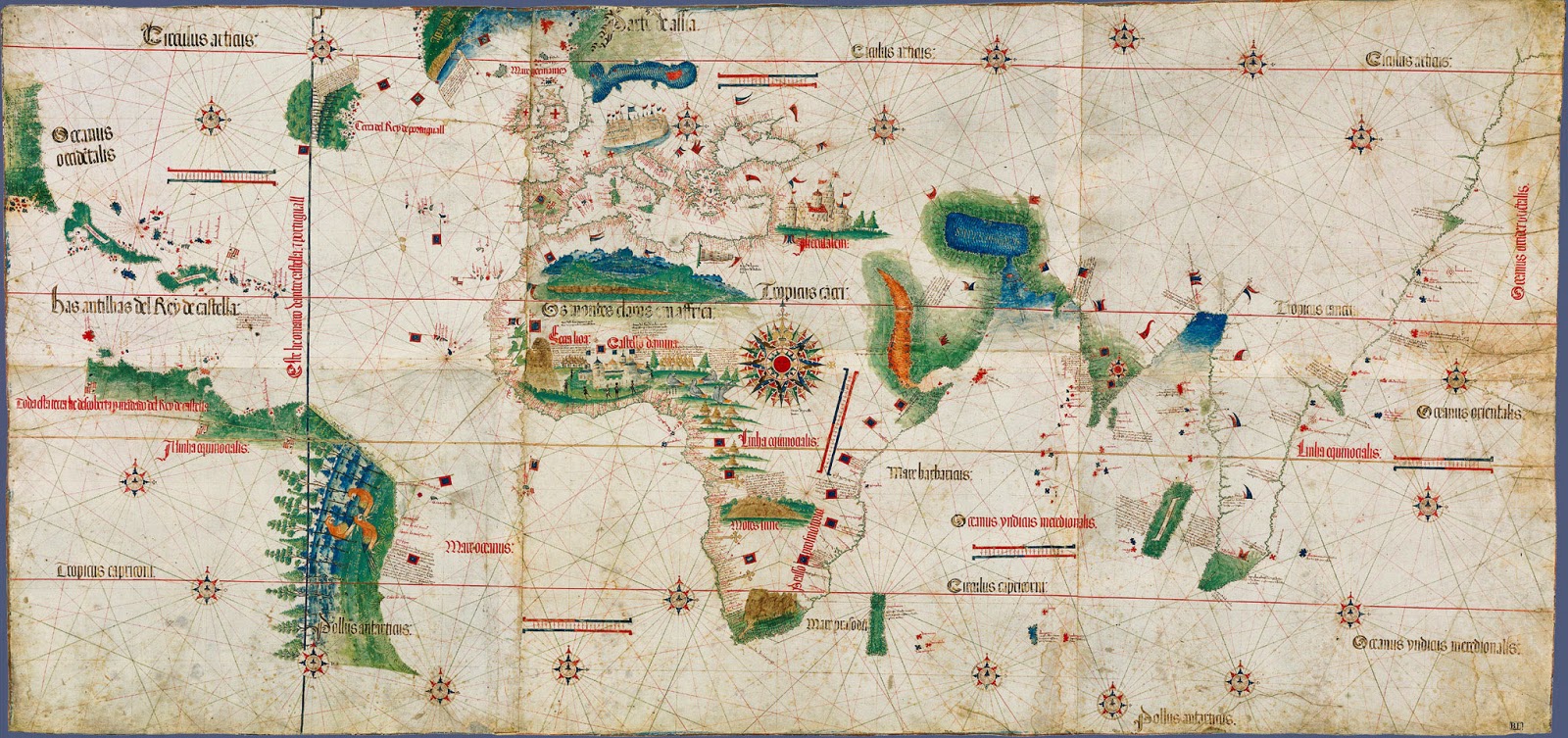
It is usually known and officially it has been recognized that Mauritius was first discovered by the Arabs (in the late 9th century or early 10th Century) and that they named the island Dina Arabi (or, Dina Arobi): the first historical evidence of the existence of an island now known as Mauritius is on a map of the globe produced by the Italian cartographer Alberto Cantino in 1502.  Cantino shows three islands which are known to represent today’s Mascarenes (consisting of Réunion, Mauritius and Rodrigues) and these were known under the Arabic names: Dina Margabin, Dina Arabi (or, Dina Arobi) and Dina Moraze.

World Map by Alberto Cantino showing (in blurred), Dina Margabin, Dina Arobi and Dina Moraze

Mauritius was visited by the Portuguese expedition (between 1507 and 1513). It was led by navigator Don Pedro Mascarenhas who visited the island and called it Ilha des Cirné (or, Ilha des Cirne after their sailing ship Cirne). It is also believed that the captain of the ship Cirne, Diego Fernando Pereira, was the claimer of this temporary settlement. The fact which remained set and well accepted is that Don Pedro Mascarenhas led the entire expedition to the Mascarene Islands (these consist of Réunion, Mauritius and Rodrigues), but similar to what the Arabs before them had done, the Portuguese also used Ilha des Cirne as a port of call and never established any permanent settlement.

Map of the World by Diego Ribeiro showing (in blurred) The Mascarenes

In 1598, the Dutch in their quests for lands of fortune, heading Easterly across the Indian Ocean, landed at Vieux Grand Port (which they named Port Warwick). Port Warwick was located in the south east of the island, and was later named Bourg Mahé (after the French governor, Mahé de Labourdonnais). Mauritius was named  “Mauritius” by the Dutch settlers after their Prince, Maurits Van Nassau. Unlike the Portuguese who had little influence in the Indian Ocean, the Dutch were much more powerful in the region. They had already several counters in the East and established a first settlement under the Dutch East India Company.


Portrait of Prince "Orange" Maurits Van Nassau

Mauritius (Originally named in 1598 by the Dutch)

Mauritius (Named after Prince Maurits Van Nassau)

In 1615, a shipwreck which resulted in the death of the Dutch governor, Pieter Both, who was coming back from India with four richly-laden ships in the bay, led Dutch sailors to consider the sea-route as cursed, and they tried to avoid it as much as possible. Those Dutch sailors who landed on the island freely cut down and took with them the precious wood of the ebony trees, then found in abundance all over the island.

Pieter Both Mountain (Named after the deceased Dutch governor, Pieter Both)

Colonisation by the Dutch started in 1638 and ended in 1715, with a brief interruption between 1658 and 1666--as they started showing more interest with the Far East, the settling in Mauritius remained very uncertain and unstable.  Various governors made their highlights while they tried to keep their colony afloat and ongoing on the island, but, continuous hardships such as: cyclones, droughts, pest infestations, lack of food, and illnesses finally took their toll, and the island began to be abandoned by these colonizers as from the year 1710. In 1712, they finally withdrew from Mauritius because of the difficult climatic conditions prevailing on the island and because it was more worthwhile to consolidate their already established base in Cape Town (South Africa).

The permanent withdrawal of the Dutch colony, allowed the French settlers to take over in 1715. The latter who were already operating in the Indian Ocean named the island: “Isle de France” (or, l’île de France). The French colonisation of the island started in 1722 and the settlers would control the island until 1810. For almost 100 years, l’île de France was developed and built up with the objective of conquering Madras and other Indian counters from the British. Under the French, colonisation was successful because they were prepared to settle and develop the infrastructure, agriculture and economy and use it as a trading post rather than just a port of call.

Ile de France (Nowadays known as Mauritius or Republic of Mauritius)

Ile de France (Shown on the map of the Indian Ocean of the early 18th Century)

Statue of  Mahé de Labourdonnais

From 1735, with the arrival of the French governor, Mahé de Labourdonnais, "Isle de France" started developing effectively. Mahé de Labourdonnais established Port Louis as a naval base and a shipbuilding centre. Under his governorship, numerous new establishments surfaced, a number of which still stand today; namely: part of Government House, The Botanical Garden of Pamplemousses, various quays and paved road, and the Line Barracks. The island was under the administration of the French East India Company which maintained its presence until 1767.
Port Louis in the 18th Century

Port Louis in the 18th Century

In 1806, the Governor General, Charles Mathieu Isidore Decaen, created the city of Mahébourg, named in honour of Mahé de Labourdonnais. It was originally known as Bourg Mahé, the first harbour of Mauritius. From that year until 1810, the island was under the charge of several officials appointed by the French Government, except for a brief period during the French Revolution, when the inhabitants set up a government which was independently governed by those living in Mauritius.
During the Napoleonic Wars, the "Isle de France" (or, l’île de France) had become a base from which French corsairs organised successful raids on British commercial ships. The raids continued until 1810 when a strong British expedition was sent to capture the island. The initial attack took place at View Grand Port in August 1810, but the main one was launched in December of the same year from Rodrigues, which had been captured during the previous year by the British fleet. The successful seizure of Rodrigues by the British in 1809 was in fact one of reasons for which the naval battle of Vieux Grand Port favoured the British side among other of their plans which could not be foiled by the French.


The  naval battle of View Grand Port (Paintings showing its major highlights)

As a matter of fact, the British landed in large numbers in the north of the island and rapidly overpowered the French, who capitulated. The naval battle of Vieux Grand Port was won from both oppositely ironic directions of the island (the North-West and South-East). By the Treaty of Paris in 1814, the "Isle de France" (or, l’île de France) which was renamed Mauritius, was ceded to Great Britain, together with Rodrigues and the Seychelles. In the act of capitulation, the British guaranteed that they would respect the languages, the customs, the laws and the traditions of the inhabitants.
It was during British rule that slavery was abolished in 1835 and Indentured labourers were contracted from India. The 19th Century was a time of great change in the population structure of the island. The coloured people and immigrants greatly modified the political of the island. The 20th Century saw a continuation of the political struggle started in the 19th Century. Political Parties were formed and the distribution of power was reformed to accommodate the different emerging segment of the population. In 1936, the Mauritian Labour Party was created and in 1968 the island became an independent country. Sir Sewsaagar Ramgoolam became the first Prime Minister of Mauritius. He passed away at the age of 85 in the year 1985 as then the Governor General of the country. His legacy lives on to this day.

The first Prime Minister of Mauritius, Honorable Sir Sewsaagar Ramgoolam

The monument of  Sir Sewsaagar Ramgoolam in the capital city of Port Louis

NOTE:
Before the arrival of the first European navigators, the Indian Ocean already knew great movement of goods and people from Indonesia to Madagascar. Many nations such as the Malays, Chinese and Dravidians might have visited the island although no written records exist to prove this.

Bibliography -
1.

Mauritius UK Connection, (1999), History of Mauritius: www.mauritius.org.uk 
Content of Website uploaded in 1999 by Mauritius UK Connection; Retrieved from World Wide Web on the 19th of April, 2015 from:

http://www.mauritius.org.uk/History.htm

2.


Voyaz.com, (2002), Mauritius History; voyaz.com 2002 copyright reserved; Retrieved from World Wide Web on the 19th of April, 2015 from:

http://mauritius.voyaz.com/history.htm

3.

Wikimedia Foundation Inc., (2015), History of Mauritius; From Wikipedia the Free Encyclopaedia; Uploaded on August 9th, 2009 and updated on February 7th, 2015; Retrieved from World Wide Web on the 19th of April, 2015 from:

http://en.wikipedia.org/wiki/History_of_Mauritius


Monday, 13 April 2015

The Power of Now (By Eckhart Tolle)

The Power of Now
~ Written by Eckhart Tolle ~
(Book review by Vimal Kodai)

Eckhart Tolle
The Power of Now
Eckhart Tolle has hereby written a book which fills the hearts of its readers with a splendid torch of enlightenment as it replenishes bundles of spiritual insights and pure spiritual knowledge and guidance with the true mighty art of an author-spiritual teacher. There are simply no words which could truly describe the potential guidance which will adorn the lives of those who master this very book’s intense messages with thoroughness. This very book of Tolle’s captures its audience with so much intensity that it does not let go of the readers’ eyes for not even a tiny fraction of a second. It does not prevent readers from truly finishing reading it, and thus, this allows them to utilise the essential knowledge gained from it with full ease and soothing comfort. The attempt of the writer, Eckhart Tolle, is to have humans understand the true values of life’s riches and wonders while fleeing the rough seas that invade ones lives with misunderstanding and true misguidance. There is a very important and crucial message which is being addressed in this book of Tolle’s as the latter sticks with the idea of residing in the present tense, the ‘Now’, which is in fact the main theme of this book of his.

 The writer wants his readers to reflect on the true potentials of the mind and what it can certainly do with great intensity as it has abilities to transform a human being from the latter’s downsides of depression and isolation to the comfort zones of prospect and spiritual enlightenment.  Eckhart Tolle indicates with so much conviction that the ‘unbelievable’ becomes reality as it surpasses the immeasurable and infinite knowledge which only and only, the one and only kind, Homo sapiens, has the absolute blessed abilities of acquiring through their unmatched faith and devotion. The awakening of the body, mind and soul; the surviving impossible  circumstances in one’s life; the accepting of the absolute truth as the topmost ideal; the differentiating between the manifest and the unmanifest; the separating oneself from “the insanely complex world of continuous problems”; the explanation of the word Being and how God realistically pacifies one from the incessant noise which prevents one from finding the inner peace within the self; and, many other themes that connect the readers with the idea of finding solutions to the “Unbelievable but true” unsolved mysteries of the gateway to unlocking the power of ‘Now’, are all strategically identified and justified with profoundness and with a deep sense of connectedness by the writer of this masterpiece.


 The ideology which lies behind The Power of Now is not simply to dwell and reside in the ‘Now’’, but it is to be capable of handling present situations, and of fully acknowledging the future objectives and goals set forth on ones pathway to spiritual enlightenment. The author-spiritual teacher, Eckhart Tolle, states that he has no intention of teaching his readers what consciousness and awakening is really about, but he wants them to listen to themselves. He wants us to be our own teachers and create our own teachings without setting boundaries that would put a halt to the glorious paths of spiritually illuminating our minds and our own selves. He has a very particular taste of distinguishing between what the ‘Now’ really is, and what the power of ‘Now’ will reinstate in the lives of those who adopt a frank and honest inspiration of its nature and obvious powers. The Power of Now cannot touch the feelings of someone who reads it without letting him/her find his/her own true self with a sense of know-how or a desire to completely surrender to the idea of reclaiming the mind as the light which will relieve him/her from all the miseries and sorrows encountered. 

The Power of Now is designed to take us from the extreme limits of conflicts and pain to the enlightening pathways of spiritual knowledge, spiritual bliss and spiritual fortune. Eckhart Tolle’s The Power of Now wants this evil nature which is nothing else but our own ego, to be left behind and terminated for good so that one is led to accept the challenging journeys with faithfulness, uncomplicated clarity of the mind, and, entirely focused on the inner energy field of ones body, mind and soul. The Power of Now charms its audience with much intensity and it creates plenty of harmony and peace in the lives of those who would choose to adopt the strategies, or merely and simply, the fruitful knowledge which sheds such a glow of inspiration and positive insight to every single situation which strikes at the heart of a human being as being impossible to handle and incapable of being resolved. The Power of Now is the book to read as it has the ability to enlighten the mind with no such fuss, no misguidance, no misunderstanding or misconception. It is one such marvel of a spiritual book which was released at the dawn of this 21st century.