Saturday, 11 June 2016

Challenging Barriers & Walking the Path (By Mark Koning)

Challenging Barriers & Walking the Path
(By Mark Koning)
~ Review & Synopsis by Vimal Kodai ~

This memoir and personal life story of Mark Koning’s, Challenging Barriers & Walking the Path, startles and moves its audience readers from start to finish. This personal story of Mr. Koning’s brings to light all the bright scopes which have made this real life individual acquire the personality which has, at present. With much keenness to relate on what can truly make a difference in the life of one and how the lives of others can be bettered, the writer sets out on a journey where he analyzes, reviews, remembers and he recalls the events in his life that have helped shape his present personality. Challenging Barriers & Walking the Path, clearly relates on the several events that have come across the writer’s life, as it indicates with much clarity how the latter made his way through to becoming the person who he has turned into, in the present moments. The writer knows where to draw the line as he addresses how much he cherishes and values all those priceless circumstances that are being featured in this book—all for the better and for the worse.

 Mark Koning and his masterpiece

Today, after going through a memoir put in play by such writer whose great calibre in exceedingly well-recognized all along the way, the readers can nonetheless note down that there are many such instances that have been well-highlighted from Challenging Barriers & Walking the Path. The very essence of such a personal life story brings to life the notion of how we, humans, can really coexist while reliving and valuing treasurable memories from the past by fitting them somewhere suitably appropriate in the corners of our running minds.

As he recalls all the highs and lows of his life’s story, Mr. Koning admits that inside all of us there resides a survivor’s instinct which is highly imperishable. The writer is very dedicated to educating his readers about the symptoms of brain injury and how these can really have end results that are full of optimism, and that they can be very pessimistic as well.


Challenging Barriers & Walking the Path gives an inside and outside look of a young man whose identity and whose quest for seeking such an identity has been filled with challenges and obstacles. Challenging Barriers & Walking the Path suggests that there are many ways by which we, humans, can live together while we share passionate and dedicated objectives which we can truly accommodate in our daily lives.

Challenging Barriers & Walking the Path confronts challenges that can’t be touched. It breaks the barriers between childhood, adolescence and adulthood as it blends all the good, bad, and in between episodes which this young terrific writer has come across. It walks the paths that leads to good faith, good intentions and good safeguard. Mark Koning’s Challenging Barriers & Walking the Path brings many highlighting events that are really worthy of being talked about and be brought to life in all perfect harmony.

Thursday, 12 May 2016

Captain America: Civil War (Movie Review & Brief Summary)

Captain America: Civil War
(A review by Vimal Kodai)

The Avengers and their counterparts are all issue of a scrutiny which hails them as being chaotic. The United Nations and many countries unsupportive of the unacceptable and unintentionally undertaken acts of The Avengers that resulted in the ending of lives of several hundreds of people during The Battle of New York, while facing Ultron (in the prequel, Avengers: Age of Ultron) and while trying to save lives in Nigeria (in this same episode of Captain America: Civil War); have thoroughly restricted the actions that are required by these peacekeepers—The Avengers have now limited powers to act at their freewill.

The team known as The Avengers (Iron Man, Captain America, War Machine, Black Widow, Vision, Scarlett Witch, The Falcon, Hawkeye, Black Panther, Ant-Man and Spider-Man) returns in the eye-catching and vitalizing movie, entitled Captain America: Civil War. The time is set in retrospective order. Hydra which is the weapon that had propelled the creation and the making of Captain America (during World War II), has yet another disciple and admirer who would make sure that its cause would stand righteously. This latter individual sets up a plot that would influence all affirmation on the fact that attacks on Nigeria and the killing of its king holds the Winter Soldier as the culprit. From the prequel to the movie Captain America: Civil War, the version brought up to be known as Captain America: The Winter Soldier, had redirected the Winter Soldier (“Bucky”) to becoming a fresh new man whose veridical identity rests on the shoulders of Captain America (Steve Rogers). The Winter Soldier who is no other than the man who inspired Steve Rogers to become the famous Captain America, is the key subject of this sequel. In a time when there is no faith in who and where the fate of the human race lies, how and where its safety could be jeopardized, and who could really be trusted to save it; The Avengers becomes a very brittle and unsteady team which falls apart—as the Iron Man, Black Widow, Vision, Scarlett Witch, Black Panther and Spider-Man are brought to gather in a force which would face their friends and ex-allies Captain America, The Falcon, Hawkeye, Ant-Man and the very notorious, Winter Soldier.

Captain America: Civil War strikes as being captivating and very entertaining as it has all the tools and the must-see assets that makes it stand tall in the middle of the other installments of Captain America and The Avengers. The mission of The Avengers had always been to uphold the cause of humankind and maintain peace and stability on the planet; however, now, they face a very different setting in their era as superheroes: they are made to believe that The Winter Soldier was responsible for the killing of the King of Nigeria and the chase begins for the hunt of “Bucky” or this well-treasured childhood friend of Steve Rogers (Captain America).

The Winter Soldier is the target and must-be objective to put a halt to, and be brought to the court of justice to be judged for all his crimes. However, he is not truly responsible for the latter acts that were done under forcefully controlled bodies led by the evil plot, Hydra. The one and only man who believes that “Bucky” is not the real culprit, Captain America (Steve Rogers), leads the latter to direct a huge mistrust upon his person by his friends and true workmates, Iron Man, Black Widow, Vision and Scarlett Witch. The Avengers have now been divided partially with two bodies of action heroes that are facing each other: Captain America, The Falcon, Hawkeye, Ant-Man and the ‘cible’, Winter Soldier are now fighting against Iron Man, Black Widow, Vision, Scarlett Witch, Black Panther and Spider-Man.

The atmosphere is very tense and it is really densely chaotic: Captain America (Steve Rogers) is now at war with his old friend and ally, Iron Man (Tony Stark). The two have sheltered a very strong body of superheroes to assist each of their respective parties.

Ant-Man teams up with Captain America whereby Spider-Man is on the land of glory with his youthful spirit at its peak as he is assisting Iron Man. Ant-Man has the privilege of working with The Avengers while Spider-Man also has the very same identical entitlement; however, the teams of the Avengers for which they hold their respective commitments and duties are somewhat different and quite apart from all that they have been fighting for since their coming into existence. The Avengers are now broken into two units which set them very apart from their true selves. One team is fighting to uphold the right of his friend, “Bucky” The Winter Soldier, and the other is dedicated towards making sure that the latter is not going to commit any further assassinations of well-respected personalities of the world.
Black Panther
Black Panther who is no other than the son of the slayed King of Nigeria also features as one of the action heroes. He displays the role of this new character brought to life by Marvel Studios as he teams up with the group of the Avengers which is risking everything for the sake of what Tony Stark (or Iron Man) stands for. Captain America, The Falcon, Hawkeye, Ant-Man and ‘the target’, Winter Soldier who all face Iron Man, Black Widow, Vision, Scarlett Witch, Black Panther and Spider-Man are a very strong threshold of superhero buddies who fight for a cause which may end up to being catastrophic.

Thus, Captain America: Civil War is distinctly a movie that sets it apart from other Marvel Studios’ movies, as it brings a very obscure story and gives a rare recap on the events that have led towards making sure that the identity of the Winter Soldier will be tainted by his past deeds. This past of his for which he holds no responsibility as he was forcefully led to undertake those serious acts of violence under the mighty hands of the evil body known as Hydra. This has him hung up tight in a war known as Civil War. Captain America: Civil War is a movie that has the requirements that makes it a must-to-be-watched epic in the series of the Marvel Studios productions of superheroes’ adventures. The ending of the movie leaves the audience somewhat silent, but it gives them a good glimpse about the upcoming sequel to this adventure of the Avengers.

The team of The Avengers (Captain America's team) v/s
The team of The Avengers (Iron Man's team)


Thursday, 31 March 2016

The Evolution of God (By Robert Wright) - A Synopsis & Review by Vimal Kodai

The Evolution of God

(By Robert Wright)
- A Review & Synopsis by Vimal Kodai -

After having written The Moral Animal, Robert Wright strikes back with yet another compelling and very appealing book; this one is entitled, The Evolution of God—a book which talks and relates quite entirely about the history of religion and the future of religious beliefs on our planet. The author desires and wishes to provide the events that precede and preclude the several worldviews on the credible existence of a divine being. His interest is directed towards the notion of survival of divine beliefs with the evolution of time and along with the coming of a scientific and technologically oriented world. He pinpoints the ways psychological well-being has improved in the course of time with the arrival of science and technology. Robert Wright also suggests and highlights with much sense of recognition that his book is an attempt to adapt to the survival of religious beliefs while trying to work side by side with the advances and marvels of science over the ages. He certainly does not claim to have the answers to many beliefs that exist with regards to all the religions that have been permanent on our planet since the beginning of time. His personal guidance and the attempts of his (from this present book) will assuredly lead to a concise and thorough worldview about the evolution of religions on our planet: he states that he wishes to foresee that the worldviews on religion and on religious beliefs with rapid globalization and scientific advancement will hopefully ease and lessen global unrest.


The Evolution of God initiates itself with the following basic fundamental themes; these are namely: I - The Birth and Growth of Gods, II - The Emergence of Abrahamic Monotheism, III - The Invention of Christianity, IV - The Triumph of Islam, and V - God Goes Global (Or, Doesn’t).


I - The Birth and Growth of Gods
Wright displays a very strong emphasis and a bright scope on the ways primitive societies used to have their beliefs passed on to the next generations with their religious faiths being “not the result of deep thought.” Wright even suggests and maintains that rituals and superstitions were the highlights of these primitive societies and that the latter were hunter-gatherers or agrarians. He brings up examples, such as those of the Chukchee people of Siberia, The Klamath hunter-gatherer of Oregon, The Haida Native Americans of the North Pacific Coast, The Mbuti pygmies of Africa’s Congo region, The Kung Bushman of the Kalahari Desert, and, The Semang hunter-gatherers of Southeast Asia which he compares and contrasts to the rise of a Biblical and stable belief on the fronts of an Abrahamic Lineage in the Jewish, Christian, and Islamic faiths.

Rituals in Primitive Societies

Evolution of Religious Beliefs

The writer of The Evolution of God explores religious practices in primitive societies by implying that the latter’s peoples’ beliefs rested on the following: observations on the natural quest for inner peace, the moral dimension of religious bodies, the brotherly and sisterly love, fear of the divine being’s presence, their stately rituals were very manipulative, and, the jumble of spirits and deities doing implausible acts to maintain control over their parts of the world was always prevailing with sacrifices and ritual correctness. Wright also states that the modern Darwinian theories somehow deflate religion and religious beliefs while cognitively and psychologically undermining the answers susceptible to certain kinds of adaptive formulae with respect to the existence of a divine being. However, he admits that evolutionary psychologists dictate that the two innate mechanisms which are bound to be found in primitive societies are as follows: kin selection which leads to sacrifice for close relatives, and nonkin selection which leads to reciprocal altruism or considerate/cooperative relationships. These are the two separate categories which make the hunter-gatherers differ in their decency.

Polynesian Gods

While, he talks and relates about the Gods of Polynesia and about the Age of Chiefdom, the writer (Robert Wright) explores all the traces, be it: scientific, exploratory, evolutionary, social, cognitive, cohesive, political or religious. As he targets countries and islands, such as: Tonga, Galapagos Islands, Samoa, Marquesas Islands, Tahiti, etc., he even mentions that key religious beliefs and principles guided the people of Polynesia. These were Tapu and Mana. Tapu refers to the forbidden part of things, such as: violating rules and principles that may result in being punished through social disapproval. Whereas, Mana, refers to the a secular meaning derived from the magical and the divine powers through a supernatural electricity that is mundane, effective, efficacious, and successful in attaining wishes and desires.


 The writer provides a very elaborative description of how the Polynesian religion might have been austere and tense with their moralistic and ritualistic obligations that led to performance anxiety. The Polynesian chiefdoms featured several religious sentiments that could be paralleled with our modern legal, political and economic systems in terms of the efficacy. Mr. Wright strongly documents the fact that in chiefdoms, Gods were the guardians of political power, supervisors of economic performance, and supporters of social norms that would help in the promotion of grouping people while living together despite their comprising of large numbers of hunter-gatherers groups and tribes.

Ishtar (The Goddess of Love)
Enki (The Sun God)
Enlil (The God of Creation)

As he crosses the many frontiers that bind the various Gods in the Ancient States of Mesopotamia—the Gods and Goddesses; such as: Ishtar (The Goddess of Love), Enlil (God of Creation) in Nipur, Enki (Sun God) in Eridu, Inanna (Goddess), etc., the author of The Evolution of God eventually leads his readers to understand what led to the instatement of Monotheism and to its complete foundation. He has a very brief and thorough written plot on the Epic of Creation and how the Mesopotamian and Egyptian, and Babylonian intellectuals made way to the drifts that bonded technology and scientific rationalism.

King Hammurabi

Marduk
Marduk
The Gods of Babylon

He turns towards Polytheism and Monotheism as he gets into the realms of the many lists of Gods that made their impact in those bodies of societies which were heading towards a civilized way of living. With such themes in mind, he brings up the idea of how political bodies and politicians emerged and how economic strategies came into being. Many key figures that were considered to have given rise to a formal and stable way of leading a governing body of politicians were the following: The King Hammurabi and Marduk. These two latter personalities had the empowered capacities of making laws, and thereafter, they made sure that these were followed and well-observed with strong understanding of their purposes in coming into being. Finally, the writer enters the gateway of Moral Progress, where he depicts the idea of having a single God as being really eminent. He introduces Moses and the Judeo-Christian civilization as he lets go of the ideal that was once built on the grounds of Polytheism and the acceptance of many Gods and Goddesses.


II - The Emergence of Abrahamic Monotheism, III - The Invention of Christianity

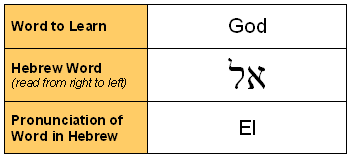
The crucial messages from the Hebrew Bible led to the emergence of an establishment of Religion and religious beliefs in Ancient Israel. The Old Testament (Or, the Hebrew Bible) was a landmark in taking history of religions to a better naturalistic and moralistic stand. Monotheism was made more credible and the eventual lineage of the Abrahamic religions adhered to the refusal of a belligerent society and that of a violence-driven age. The author of The Evolution of God shapes his next few chapters by addressing the ways by which the Bible was translated and what led to its ongoing transliteration. As such, he supports the fact that the Hebrew Bible was a beginning point in the restoration of a factual and set foundation of a rigid and credible religious foundation in the Middle East. He maintains that the ancient world relied on many superstitions and ritualistic ceremonies, whereby the Hebrew Bible relayed a bright and enlightening glow towards a better portrayal of the divine being’s presence—known as El (term often used in Hebrew which means, God—in English). The story of Elijah, the Book of Hosea, the birth of the Israelites, The story of King Josiah of Judah, The story of King Zebekiah of Judah, The Jews, The Christians and The Muslims would all rise from the theological conventions set up by beliefs based on the Abrahamic God.


Jesus of Nazareth whose purpose was served on the soils of Israel is known to have been cited as: the Messiah, the King of Israel, the destroyer “with words of mouth” of the unlawful nations, and the prevailing logic to the principles set forward in the name of God.

Jesus (The Messiah)

JESUS OF NAZARETH (Jesus Christ)

The Gospel and the Books of Matthew, Mark, Luke, and John are all accounted for with “validity” and “credibility” as the basis and foundations of the life and words of Jesus. The Apostles and their impacts on Christianity, the moral terms that regards their missions and the exercise of this very religion, Christianity, are all well-framed and put in place by stating why Jesus became to be known as the saviour.

Middle East (The Land of Babylonian Gods, the land where rose Judaism, Christianity & Islam)

IV - The Triumph of Islam, and V - God Goes Global (Or, Doesn’t).
The other few chapters relate on how Islam came into being. How the prophet Muhammad became an influential figure and that he was the one who basically set forth the principles and routes devout for Muslims and other believers in the Post-Hebrew Bible and Post-Christian Bible era. The writer also gives a glimpse on the future of the evolution of religions and religious beliefs on our planet. He highlights the many other sides of other religions; such as, Buddhism under the influence of the emperor Ashoka, Hinduism with the worship of Hindu Gods, Atheism and the world of atheists, the experience of a heavenly and Godly feeling in the genes of humans, the expansion of the moral imagination over the millennial, what good does “God” do to traditional believers, Truths and Consequences, Thinking and Feeling about the views of religious origins, and, Varieties of Religious experiences that consist of a crude learning of a mechanism in the human brain leading to perceptions in various religions.

The Emperor Ashoka


Prior to his appendix, Wright provides an Afterword which concludes itself with one of the scenes known as The Ultimate reality of Science. The latter portrays how a believer perceives the modern world while recognizing that there is God at its source—that moral order and the moral dimension to life on Earth has “God” as the topmost responsible party of its evolution.

Robert Wright’s The Evolution of God is book that is very scholarly and it has the tools and assets that could dictate factual events and circumstances that pertain to the evolution of religion on our planet. The Evolution of God is also a book that explains with clarity how some major events in the history of religion were misplaced and misunderstood due to the ways these same events manifested themselves and that they came to be put in the ancient manuscripts and scriptures. The Evolution of God takes us to the depth of the evolution of religions with a certain major emphasis being brought to the nature of the divine being’s portrait to the primitive societies. It also leans upon the many facets of religious beliefs as they manifested themselves during the millennia. The Evolution of God is a book that is well-written, well-researched, well-analyzed and well-set. It brings a very profound and bright look at the scope of the evolution of God (or, Gods) while displaying magnificent ways to covey how the latter came to being known as the one who was revealed through the famous sacred scriptures known to humankind.

Wednesday, 30 December 2015

Discovering God: The origins of the great religions and the evolution of belief (By Rodney Stark)

Discovering God: The origins of the great religions and the evolution of belief
(By Rodney Stark)
~ A Review by Vimal Kodai ~
Dr. Rodney Stark


Rodney Stark raises various issues about the beliefs in God while he maintains a clear but concise picture of the evolution of such a belief with the passage of time. Discovering God: The origins of the great religions and the evolution of belief is a book that has been written after thorough and arduous research was done on many subject matters evolving around the theme of the origins and nature of great religions on our planet. Having examined various religious beliefs and all the several origins of the beliefs surrounding the idea of the presence of a divine being, Stark is very admirable as he masters many aspects of this subject with true conviction. He is an author whose insights and aspirations about such a topic is far from being underestimated. His research and profound studies on this theme gives rise to a perfect intuition about how the idea of Discovering God can be very illuminating and truly enlightening. He perceives religious beliefs and the evolution of religions as a ideal which surpasses the very touch which we, humans, can always rely upon while we can always depend on possessing such a perception which is only truly adapted to the glory of this divine presence’s omnipotence. Stark has a theoretical model which is setup in such a way that it will address the evolution of human cultures from its biological roots to its mechanical and social perceptions.


Stark adopts a frank and structured emphasis on the plausible evidences of a divine being. This has been instated and well-framed by human beings. Mr. Stark examines many stages that are initiated by the primitive societies of the ancient times, he focuses on the idea of our becoming accustomed to cultures that have evolved from extensive accounts on how creation came into being, the author even emphasizes on the universal features of human societies; and, he explores contemporary approaches to the biological, cultural and theological implantation of religions on our planet.


While he fetches for many thematic solutions that are always pervasive in the minds of humans, he handles the idea of How to Discover God with such enthusiasm that his book does not escape from the readers’ mind without any boundaries. The writer has a very socio-theological way of handling the many appointed religions on our planet.


While being adapted to the idea of “Credibility”, and by accepting such a theme as the basis and source to the acceptance of a divine being, Rodney Stark states: “It is one thing to possess a religious culture, but it is something else to convince others to accept it.” (p. 51) Stark also feels that mysticism and mystical experiences have revealed parallels to the paranoid darkness in which many humans identify themselves with the supernatural and unbalanced forces. Thus, as he even states that in every society, people differ in their religious tastes, he mentions that the intensity of our faiths and beliefs depend upon our religious preferences.


As he frontiers the many areas which encompass religions and religious beliefs, the writer of Discovering God: The origins of the great religions and the evolution of belief attacks many key themes that evolve around many extensive accounts of how creation came into being; these are namely: many cultural evolutions, inventions of God, Ghost Theories, Fairy Tales, Revelations, Catholic Saints, Epic of Gilgamesh; Aztec, Mayan & Inca religious practices, tribal practices in Tigris-Euphrates Valley, Greco-Roman Cybelene narratives, Greek Gods, Cults and Mithraic faiths; The Pharaoh God, Monotheism, Rulers and Priests, Sacrifices and its several origins and purposes; Roman religions, Moses, Polytheism, Missionizing, Religions in the Indus Valley, Vedic Gods, The Vedas, Sin and Salvation, Upanishads and Hinduism, Jainism, Buddhism, Chinese Gods, Religion in ancient China, Gods and ancestors, Priest and Rituals, Taoism, Confucianism, Folk religion, The Rise of Christianity, The historical Jesus, The theological Christ, the Christian Doctrines, Sacraments, The Pagan intellectuals, Mecca and its admirable traditions, The Prophet Muhammad, The Medina, The Qur’an, Allah, Building an Arab State, Muslim Sectarianism, Social Control of religions and Divine Inspiration.


Another Edition of the book by Dr. Stark

With such themes and main topics well-addressed in this book of his, Rodney Stark provides a concise and thorough study of many profound religious beliefs of our planet. This book analyzes many various religious roots and many religious faiths all with a melodiously honest approach. Stark’s broad study and in-depth analysis of the subject matter undertaken in his masterpiece does not leave his readers without any further doubts. The latter is able to maintain a perfect discipline while going through each and every chapter of this writer’s esteemed book.